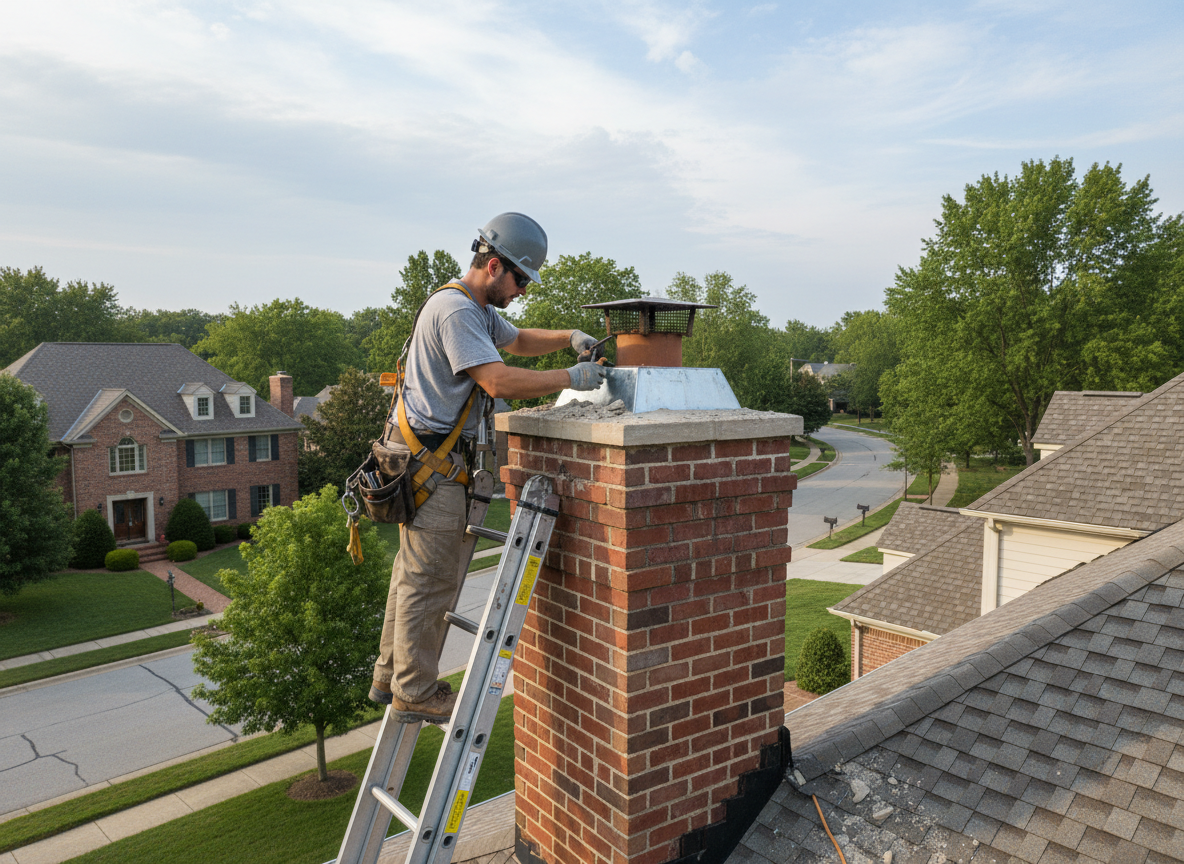
Upper Arlington homes built from the 1920s through 1960s in neighborhoods such as Arlington Ridge and River Ridge often feature masonry chimneys topped with original clay or early metal caps. Freeze-thaw cycles in Franklin County’s humid continental climate loosen mortar and corrode fasteners, allowing water to enter the flue and damage the crown. Technicians at Infinitystone Tech inspect the cap, crown, and flashing together because isolated cap replacement frequently fails when the underlying masonry has already cracked from decades of Ohio winters.
Stainless steel or galvanized replacements must match the existing flue size and roof pitch found on Tremont and River Ridge properties. Wind gusts funneled between Northam Park and the Upper Arlington Municipal Center accelerate cap wear on west-facing chimneys. Crews secure new caps with masonry screws and high-temperature sealant rather than relying solely on friction fit, which loosens quickly in the area’s repeated freeze-thaw events. Access from the roof edge near the Upper Arlington Public Library district often requires ladder placement on narrow side yards common to these lots.
Homeowners in nearby Worthington and Grandview Heights sometimes discover animal intrusion after a cap fails; the same issue appears regularly in Upper Arlington when screens corrode. Replacement includes fitting a new spark arrestor sized for local code clearance above the roofline. Work is completed from the 3855 Reed Rd base with 24/7 dispatch so residents do not wait through another storm cycle before the flue is protected again.
Edge cases include caps on multi-flue chimneys serving both furnace and fireplace; each flue requires its own properly sealed termination to prevent cross-drafting. Technicians also check for creosote staining on the exterior brick, a sign that water has already bypassed the cap and is affecting draft performance in the region’s humid summers.
Technician insight
In Upper Arlington the thing that catches most people out with chimney cap repair is how quickly the clay tiles on 1950s chimneys in Arlington Ridge and Tremont crack after one hard freeze; homeowners replace just the cap and miss the hairline crown fractures that let meltwater back in during the next thaw.
Cracked Cap After Early Freeze
A River Ridge homeowner noticed water stains on the fireplace mantel following the first hard frost. Inspection revealed a corroded original cap and hairline cracks in the crown caused by repeated freeze-thaw cycles. The crew removed the failed cap, repaired the crown, and installed a stainless replacement with proper anchors. Draft tested clear and no further moisture entered during the remaining winter storms.
How it works
- 1
Site Assessment
Technician climbs to evaluate cap condition, crown integrity, and flashing seal while noting roof pitch and nearby tree cover typical in Upper Arlington yards.
- 2
Material Selection
Choose stainless or galvanized cap sized to existing flue, ensuring spark arrestor meets Franklin County clearance rules for four-season exposure.
- 3
Removal and Prep
Detach old cap, clean debris, and repair any mortar loss around the crown before installing new hardware.
- 4
Installation and Test
Secure new cap with masonry anchors and sealant, then verify draft from inside the home to confirm no restriction was introduced.
Pricing
Cost depends on cap material, number of flues, and roof access difficulty; upfront quote provided after inspection.