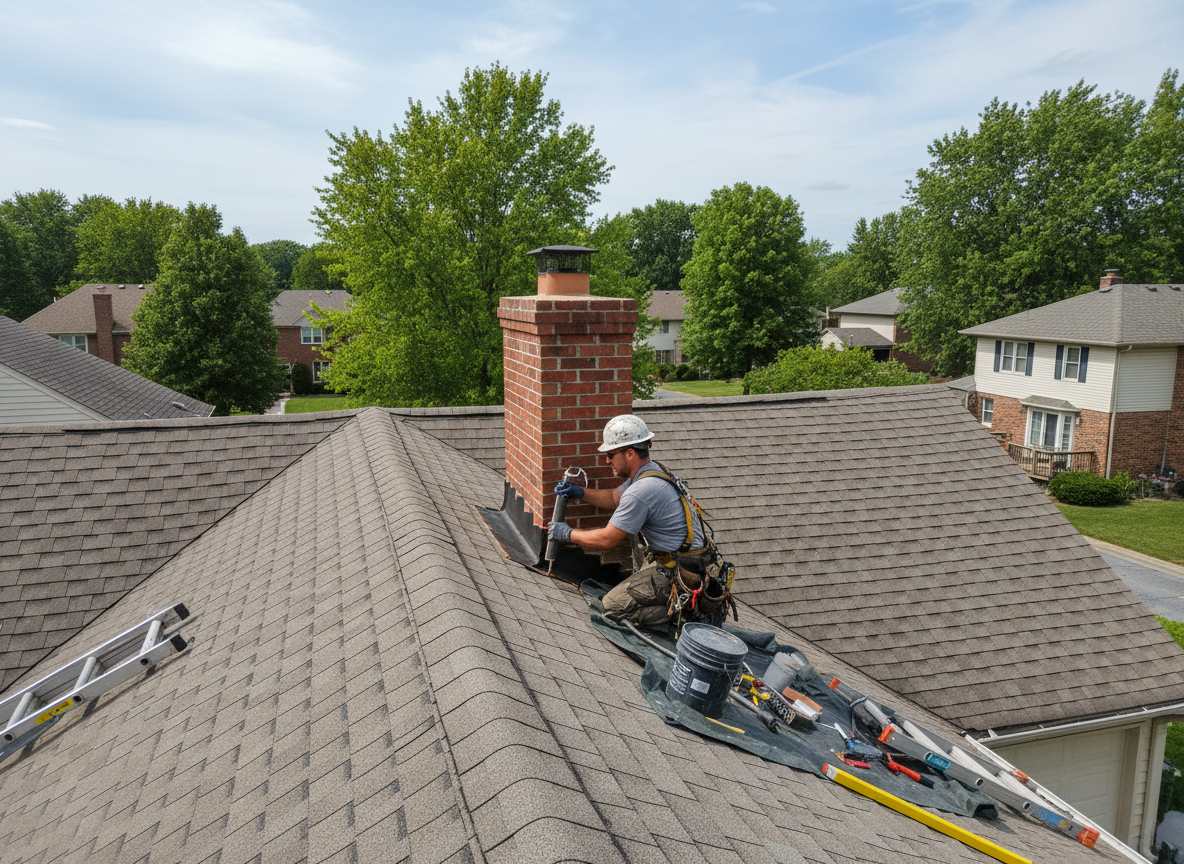
Upper Arlington homes built from the 1920s through 1960s in neighborhoods like Arlington Ridge and River Ridge often have masonry chimneys with original flashing that has corroded after decades of freeze-thaw cycles. Humid continental weather brings heavy spring rains followed by sudden winter drops below freezing, forcing water behind the crown and into the flue. When leaks appear near the Upper Arlington Municipal Center or Northam Park addresses, the water frequently travels along the roof deck and shows up inside second-floor ceilings rather than at the chimney base.
Repair starts with removing failed step flashing and installing new copper or stainless steel pans that extend under the shingles and tie into the chimney liner. In Tremont and nearby Worthington borders, many chimneys sit on sloped lots where soil settles unevenly, tilting the crown and creating hairline cracks that widen each season. We repoint only the affected joints with type N mortar matched to the original brick, then apply a breathable water-repellent coating that allows vapor to escape while blocking liquid water.
Access on two-story homes near the Upper Arlington Public Library or Grandview Heights line often requires scaffolding rather than ladders because of mature tree cover and narrow side yards. We always check the attic for hidden rot in rafters before closing the job, since Franklin County humidity can keep moisture trapped for months after the exterior leak is sealed.
Technician insight
In Upper Arlington the thing that catches most people out with chimney leak repair is how quickly water from a cracked crown travels along the roof deck into second-floor ceilings in Arlington Ridge homes; the four distinct seasons here mean one good freeze-thaw cycle after a spring rain will push the leak ten feet from the chimney before homeowners notice.
Tremont Two-Story Leak
Homeowner in Tremont reported ceiling stains after March rains. We found deteriorated flashing on the north side where the chimney met the main roof. New copper pans and crown repair stopped the intrusion; attic sheathing showed only surface staining that dried without further work.
How it works
- 1
Site Assessment
Inspect chimney, flashing, crown and attic from 3855 Reed Rd base outward to map every water path.
- 2
Material Removal
Take out damaged flashing, cracked crown sections and deteriorated mortar without disturbing sound brick.
- 3
New Flashing and Crown Work
Install custom copper step flashing and reform the crown with reinforced mortar and proper slope.
- 4
Final Seal and Test
Apply breathable sealer, then run a controlled water test to confirm the leak path is closed.
Pricing
Upfront quote after inspection; cost driven by stories, access and extent of interior damage.