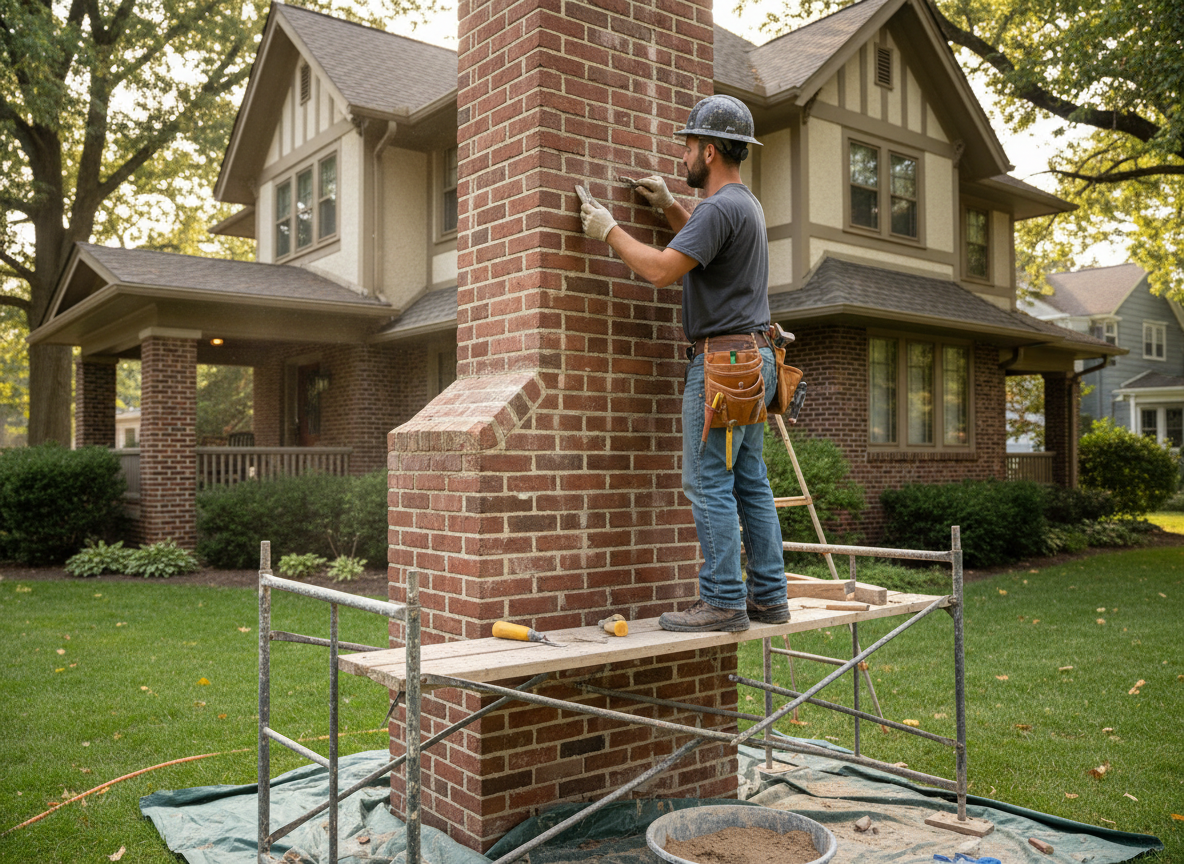
Upper Arlington homes built decades ago in areas like River Ridge and near Northam Park often show mortar erosion from repeated freeze-thaw cycles common in Franklin County's four distinct seasons. Tuckpointing replaces failed mortar without full chimney rebuilds, matching original brickwork while sealing against rain and snow that pools around the Upper Arlington Municipal Center vicinity. Crews at Infinitystone Tech, based at 3855 Reed Rd, work 24/7 to handle calls from Worthington and Grandview Heights residents whose chimneys face accelerated joint failure on north-facing exposures.
The process starts with raking out deteriorated mortar to a consistent depth, then packing fresh Type N or O mortar formulated for local humidity levels. Edge cases include chimneys near Tremont with shifting foundations from clay soils, where new mortar must flex without cracking. Technicians avoid modern high-strength mixes that trap moisture behind older brick, a common mistake that leads to spalling within two winters. Access challenges arise on two-story homes near the Upper Arlington Public Library where scaffolding must navigate mature tree lines without damaging landscaping.
Code considerations in Franklin County require maintaining proper flue clearances during tuckpointing, especially on shared walls in denser Arlington Ridge blocks. Homeowners should inspect for white efflorescence or missing mortar after heavy spring rains, as these signal water intrusion that can rot nearby roof decking. Infinitystone Tech matches mortar color and texture to existing joints using on-site samples rather than generic pre-mixed colors that stand out after curing.
Seasonal timing matters because tuckpointing needs above-freezing temperatures for proper curing; late fall jobs in Grandview Heights often require temporary enclosures. The work prevents draft issues and carbon monoxide risks that arise when joints open up around flue liners.
Technician insight
In Upper Arlington, the thing that catches most people out with chimney tuckpointing is how quickly north-facing joints on 1950s-70s brick homes in Arlington Ridge and Tremont fail from freeze-thaw cycles because the original mortar was never meant for our humid continental winters; homeowners often wait until water stains appear inside near the flue, but by then the damage has already reached the flashing around the crown.
Tuckpointing on a Two-Story Chimney Near Northam Park
Homeowner noticed crumbling mortar and water stains inside after a heavy winter. Inspection revealed open joints on the north side allowing rain to reach the flue liner. Crews raked and repacked all four elevations with matching mortar, then sealed the crown. The chimney now sheds water properly without further interior moisture issues.
How it works
- 1
Inspection and Mortar Testing
Technicians examine joint condition, test for loose brick, and match original mortar composition on-site in Upper Arlington.
- 2
Raking and Cleaning Joints
Old mortar is removed to uniform depth, joints are brushed clean of debris, and dust is vacuumed to prepare for new material.
- 3
Mortar Mixing and Application
Fresh mortar is mixed to match color and strength, then packed firmly into joints using proper tooling for weather-tight seals.
- 4
Curing and Final Inspection
Mortar cures under monitored conditions, followed by a walkthrough to confirm no gaps remain before crews leave the site.
Pricing
Pricing depends on chimney height, extent of joint damage, and access constraints typical in older Franklin County neighborhoods.