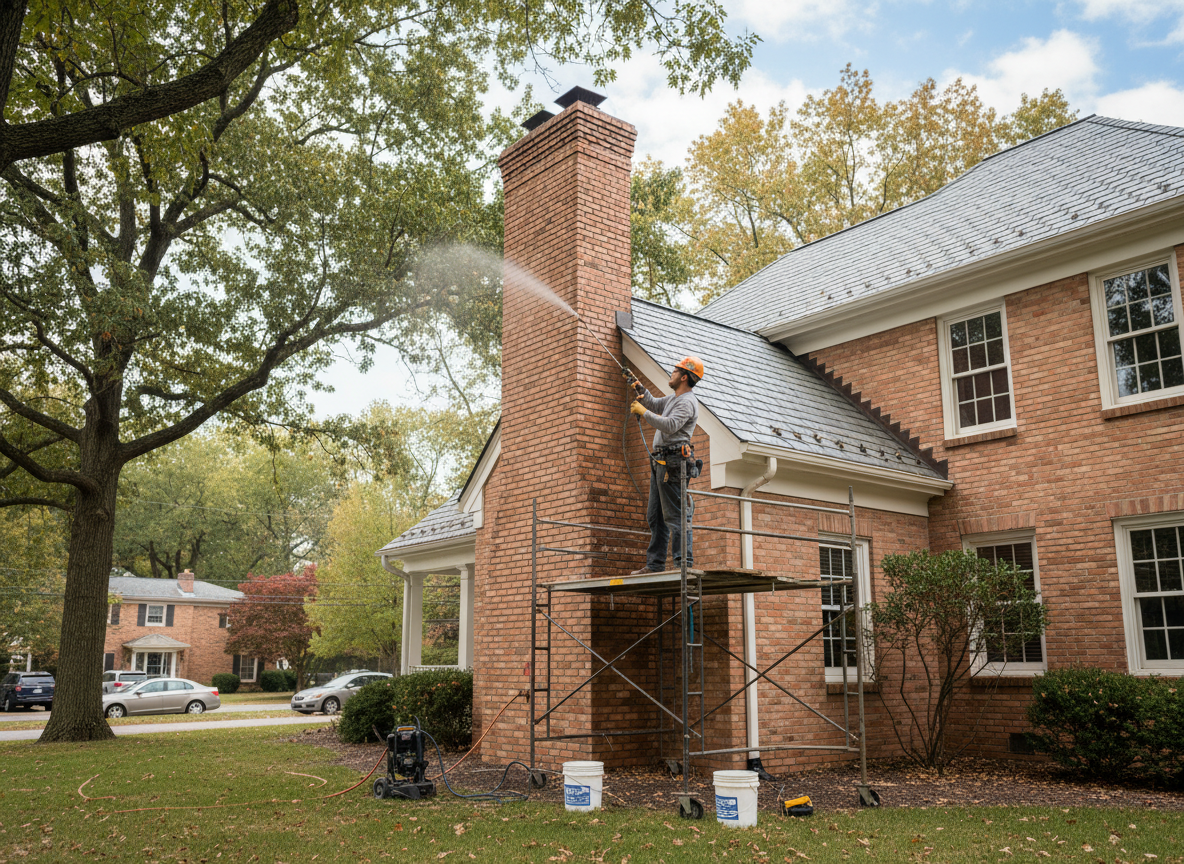
Upper Arlington homes in neighborhoods like Arlington Ridge and Tremont often feature mid-century brick chimneys exposed to Franklin County's humid continental climate. Freeze-thaw cycles drive water into mortar joints and flue liners, accelerating spalling and leaks that reach living spaces. Proper waterproofing starts with inspecting the crown, flashing, and cap before applying breathable sealers formulated for masonry in variable temperatures.
River Ridge and nearby streets closer to the Olentangy corridor see additional runoff during spring rains that pools against foundations and chimney bases. Standard latex paints fail here because they trap moisture; only vapor-permeable silane-siloxane treatments allow the brick to dry while repelling liquid water. Technicians must also address edge cases where adjacent trees drop debris that clogs cricket flashings, creating hidden entry points for water during summer storms.
Seasonal Guidance
Winter ice dams along the roof-chimney intersection remain the leading cause of interior staining in Upper Arlington. Applying waterproofing before the first hard freeze prevents the expansion damage that appears only after snowmelt. Homeowners near Northam Park frequently discover cracked crowns only when attic insulation becomes saturated, requiring targeted sealing rather than full rebuilds.
Common Edge Cases
Chimneys on homes bordering Grandview Heights or Worthington often share walls or sit at different heights, creating wind-driven rain patterns that standard coatings miss. Code requires maintaining proper clearance from combustible materials when resealing near the roofline; skipping this step risks both moisture and fire issues.
Technician insight
In Upper Arlington the thing that catches most people out with chimney waterproofing is how quickly the freeze-thaw cycles in our humid continental climate open hairline cracks in the crown on homes built before the 1970s in Tremont and Arlington Ridge; once water gets behind the brick it travels down the flue and shows up as stains two seasons later.
Tremont Home Leak After Heavy Spring Rain
Water was entering the attic on a two-story brick home near the Upper Arlington Public Library. Inspection showed a deteriorated crown and failed step flashing allowing runoff from the north exposure. We cleaned, repaired the crown with compatible mortar, and applied waterproofing sealer. The homeowner reported no further moisture after the next rainfall.
How it works
- 1
Site Assessment
Inspect crown, flashing, and flue from the 3855 Reed Rd base outward, noting water stains and mortar condition in the specific exposure of the home.
- 2
Surface Preparation
Remove loose debris, clean efflorescence, and repair minor cracks before any sealer contacts the masonry.
- 3
Application
Apply two coats of masonry-specific waterproofing during dry weather windows typical between seasonal shifts in Franklin County.
- 4
Final Check
Verify runoff paths and confirm no sealer has contacted nearby landscaping or windows.
Pricing
Upfront quotes reflect chimney height, access, and existing water damage; no hidden fees.