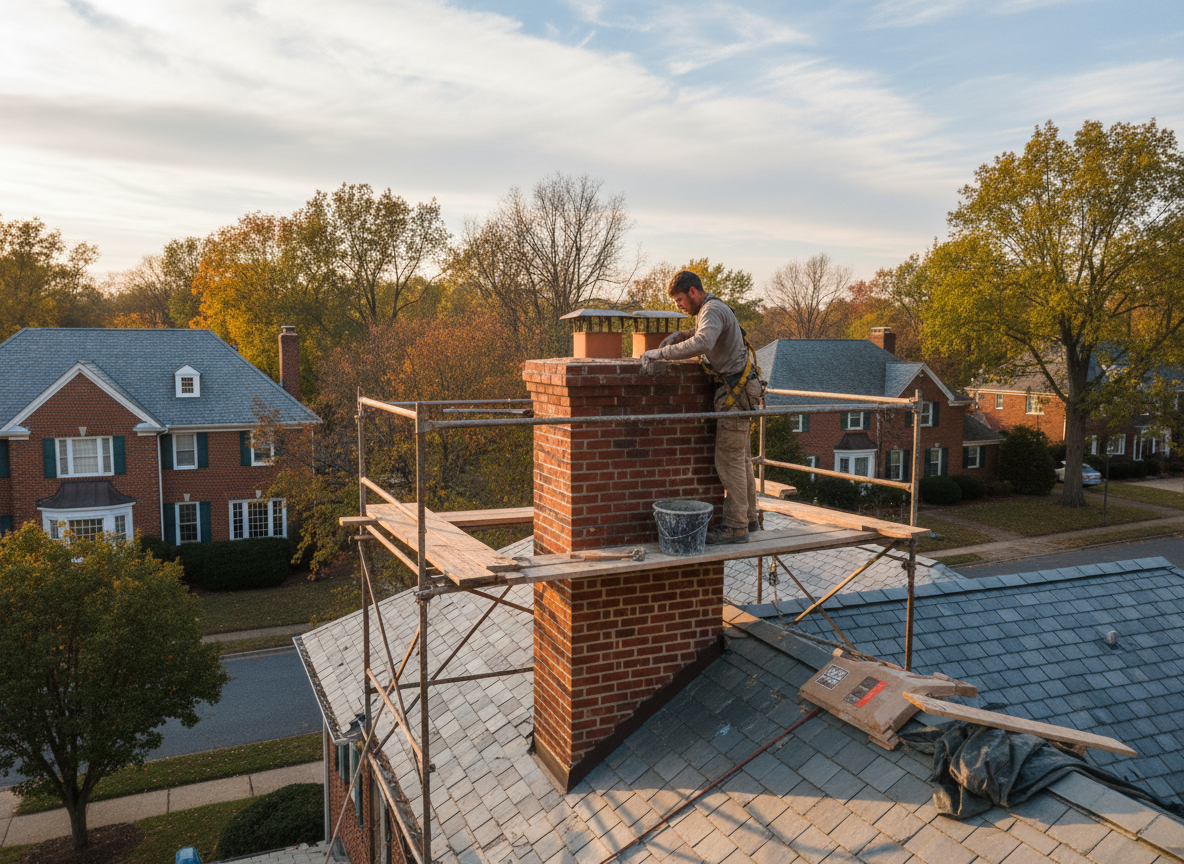
Upper Arlington homes built through the mid-20th century often feature masonry chimneys that suffer from the area's four distinct seasons. Freeze-thaw cycles in Franklin County accelerate mortar joint failure and brick spalling, especially on north-facing exposures common in neighborhoods like Arlington Ridge. Water infiltration during humid summers followed by winter expansion creates hidden flue liner cracks that allow carbon monoxide migration into living spaces near the Upper Arlington Municipal Center.
River Ridge and Tremont properties sit on terrain with slight slopes that direct roof runoff toward chimney bases. This concentrates moisture at the crown and flashing, degrading clay tile liners faster than in drier parts of nearby Worthington or Grandview Heights. Technicians must inspect both exterior masonry and interior smoke chambers because settling from local soil conditions can shift the entire stack without obvious exterior signs.
Repairs here require materials rated for repeated thermal shock and moisture retention. Standard cement parging fails quickly under Upper Arlington's humidity swings, so proper tuckpointing with lime-based mortars and stainless steel liner inserts are frequently needed to meet code while preserving the original brick appearance around Northam Park and the Upper Arlington Public Library.
Technician insight
In Upper Arlington, the thing that catches most people out with Residential chimney repair is how the freeze-thaw cycles hit older brick stacks in Tremont and River Ridge harder than newer builds. The humid continental climate plus roof slopes that funnel water to the chimney base lets moisture sit in the mortar all winter, then spall the brick from inside out. Homeowners near Northam Park often wait until they see interior staining before calling, which means the flue liner is already compromised.
Mortar and Liner Issues on Arlington Ridge Home
Homeowner in Arlington Ridge reported poor draft during cold snaps. Inspection revealed cracked mortar and a deteriorated clay liner from repeated freeze-thaw exposure. Crew rebuilt the crown, repointed with appropriate mortar and installed a stainless liner sized for the existing flue. Draft returned to normal and the system passed safety checks.
How it works
- 1
Site Inspection
Technician examines chimney crown, flashing, masonry and flue from roof and interior access points in the specific home.
- 2
Damage Assessment
Identify mortar loss, liner cracks and water paths created by Franklin County freeze-thaw and runoff patterns.
- 3
Targeted Repair
Perform tuckpointing, crown rebuilding or liner insertion using moisture-resistant materials suited to local conditions.
- 4
Final Testing
Verify draft, check for leaks and confirm safe operation before leaving the Upper Arlington property.
Pricing
Upfront quote after on-site inspection; cost varies with chimney height, extent of masonry damage and liner needs.