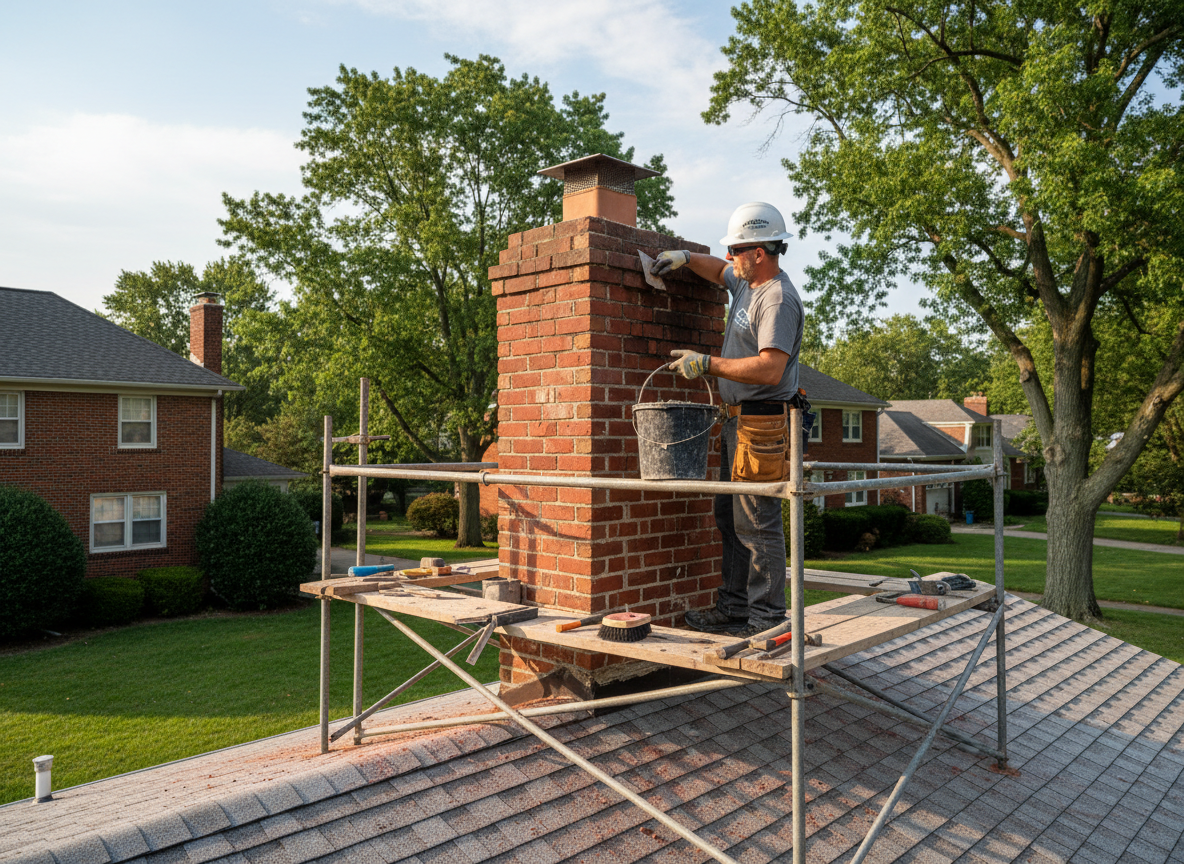
Upper Arlington homes built in the mid-century often feature masonry chimneys integrated with asphalt or slate roofs. In neighborhoods such as Arlington Ridge and Tremont, these chimneys face constant stress from the region's humid continental climate. Four distinct seasons bring heavy spring rains, summer humidity, fall wind, and winter freeze-thaw cycles that crack mortar joints and loosen flashing. Roof chimney repair here requires matching existing brick and mortar while ensuring the roof plane stays watertight against runoff that pools near the Upper Arlington Public Library area and Northam Park.
Franklin County building practices and proximity to Columbus mean many roofs slope toward shared property lines in River Ridge and Grandview Heights. When a chimney crown fails, water travels under shingles and into attics before homeowners notice. Repair work must address both the masonry stack and the roof deck transition, using step flashing that ties into existing valleys. Worthington and Grandview Heights homes share similar age and construction, so crews routinely check for hidden rot along the roof deck where previous repairs used incompatible sealants that trap moisture.
Technicians at 3855 Reed Rd respond 24/7 because sudden wind-driven rain during Ohio thunderstorms can turn a small crown crack into an interior ceiling stain overnight. The job always starts with a roof-level inspection that includes checking for missing or displaced bricks, failed cricket flashing, and deteriorated counter flashing. Materials are chosen to match the original brick color and texture so the repair blends with the surrounding roof plane rather than standing out after the work is complete.
Technician insight
In Upper Arlington the thing that catches most people out with roof chimney repair is how quickly freeze-thaw cycles in our four-season climate open mortar joints on mid-century brick stacks in neighborhoods like River Ridge; homeowners often notice only after water has already reached the attic because the roof slope directs runoff straight into the flashing line.
Tremont Roof Leak After Winter
Problem: Ceiling stain appeared after a late-winter rain. What we found: Cracked crown and separated flashing on a 1960s chimney where ice had lifted the mortar. What we did: Rebuilt the crown, replaced step flashing, and tied it into the existing slate roof. Outcome: Leak stopped and roof plane remained intact without replacing large sections of shingles.
How it works
- 1
Roof Access and Safety Setup
Crew secures ladders at multiple points and places protective boards on shingles to prevent damage while working on the chimney stack.
- 2
Detailed Chimney and Roof Inspection
Technician examines the crown, flue, flashing, and surrounding shingles for cracks, missing mortar, and water intrusion paths common after Franklin County winters.
- 3
Masonry and Flashing Repair
Damaged mortar is removed and replaced, new step flashing is installed to tie into existing roof valleys, and the crown is rebuilt or sealed as needed.
- 4
Final Leak Test and Cleanup
Water is applied to the repaired area to confirm no leaks remain, then all debris is removed from the roof and yard before departure.
Pricing
Upfront quotes provided after on-site inspection of the roof and chimney condition.